

Headshot Expression: It’s All in the Eyes
CLICK THE EDITION IMAGE BELOW TO READ
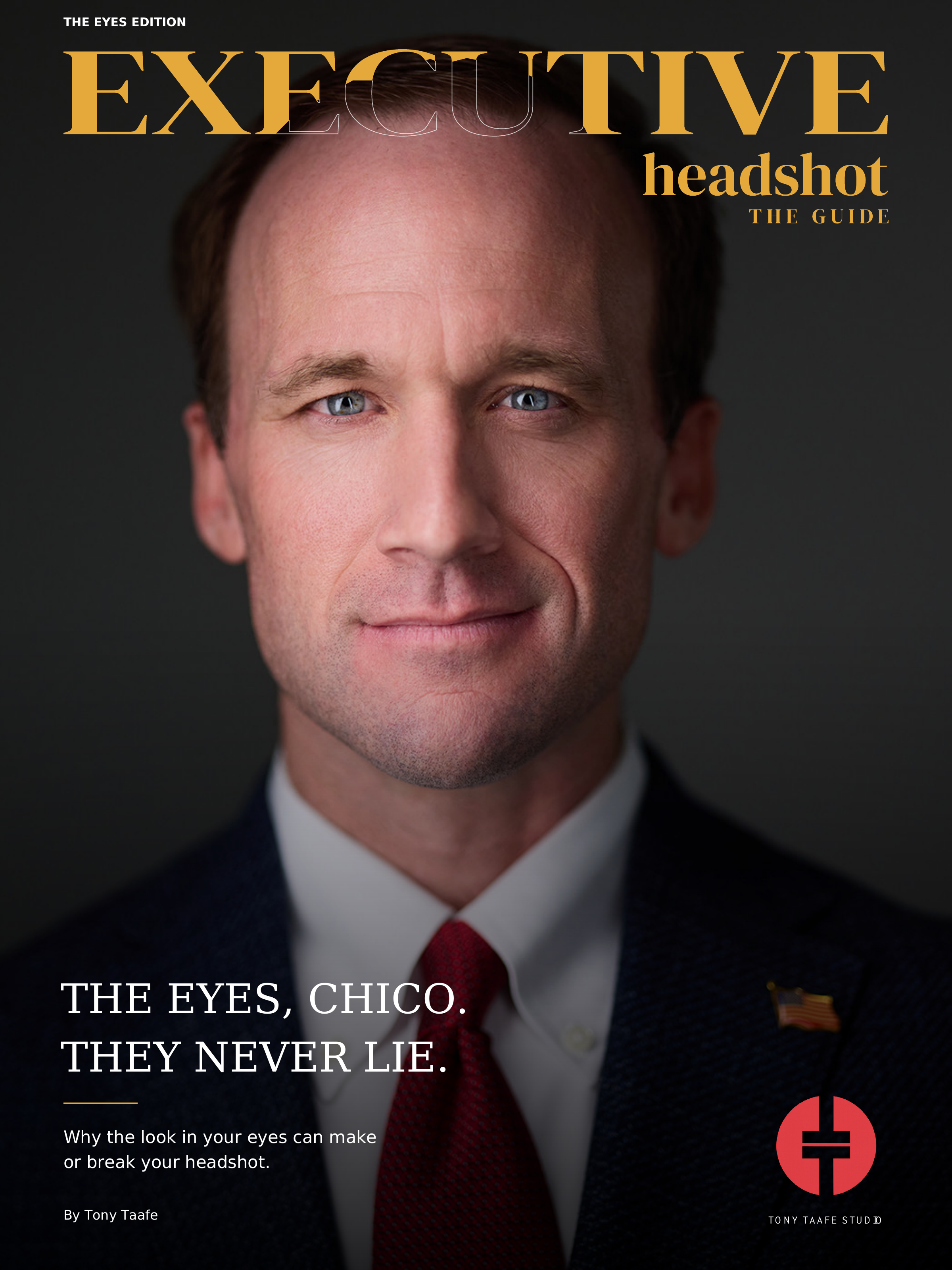
The Executive Headshot · The Eyes Edition
By Tony Taafe
The eyes, Chico. They never lie. Why the look in your eyes can make or break your headshot.
The smallest difference in a headshot expression
Think about a close-up in a film. Before the character says a word, their eyes can draw you in, put you on edge or make you feel like you know what they’re thinking. The expression might be subtle, but the feeling is immediate.
A photograph can work in much the same way. When someone sees your headshots, they don’t consciously analyze every detail before forming an impression. Their brain responds quickly to the visual cues in front of them, drawing on a lifetime of experiences and associations. Often, they simply feel something before they’ve considered why.
We’re used to reading faces in life and on screen. Film and television show us how much a look can communicate without a word. But a look is open to interpretation: the same expression can feel different depending on the person viewing it and the context in which they see it.
That first impression may not tell someone who you really are. But it can influence how they feel about the person they see. And in a headshot, the eyes are where that connection begins.
I can photograph two frames seconds apart, with the same lighting, the same background and the same person. In one, the expression connects. In the other, it doesn’t. Sometimes the difference is so slight you might struggle to put your finger on it. But you feel it.
That’s why the eyes are non-negotiable in my work. If they don’t connect, the rest of the photograph can be technically perfect and still fall short.
What makes the eyes right? For me, it’s that you believe them. There’s a sense of emotion and intention there, and the viewer feels something in response.
A confident headshot doesn’t look the same on everyone
There isn’t one expression that works for every person. Your eye shape, your natural expressions and how you intend to use your images all matter. Of course, we photograph a range of expressions for everyone.
For someone with a big, natural smile, I might get them laughing and photograph the moment just after the laugh settles. The mouth has relaxed into a smile, but the energy is still there in the eyes.
For someone who prefers a quieter expression, the direction might be more deliberate. I’m a good example: I prefer a closed-mouth smile when I see photographs of myself. For me, a slight narrowing of the eyes and a small, assured smile creates a look that feels confident and approachable.
I would never try to make my eyes wider in a photograph because the eyes never naturally widen unless we’re surprised, unsure or afraid. They never naturally widen when we smile, and definitely not when we’re confident. So when we deliberately open our eyes wider in a photograph or headshot, it always looks unnatural.
Think of a photograph or video of your favorite leader, whoever that may be. In serious times, you’ll struggle to find one where they’re not intentionally narrowing their gaze toward the camera. It signals intention, assuredness, and confidence in what they’re saying.
Think of your favorite movie star on the red carpet. You’ll rarely find a photograph where they’re looking directly into the camera without narrowing their eyes a little. They’ve been trained to do that because it makes them look more comfortable and confident.
Neither is a formula for everyone. The aim is to find expressions that feel believable on you and give the viewer something to connect with.
Your photographer is your mirror
You can’t see your own face while you’re in front of the camera. I can, and that’s where I help with your expression.
If we’re working on a small, closed-mouth smile, for example, and you’re not used to doing it, the eyes might look great but the lips can press together a little too tightly. Sometimes the mouth goes flat. Small details like these can make an expression feel tense, even when everything else is working.
That’s where my direction comes in. I watch for those changes and help you make the adjustments you can’t see for yourself. Some expressions happen naturally; others need a little more guidance. What matters is that the final result looks believable.
Catchlights: a little light in the eyes
If you look closely at a headshot, you’ll often see a small reflection of light in the eyes. That’s called a catchlight.
It’s something I consider essential. Without it, eyes can look flat: you see the color and contrast, but lose some of the depth and energy that make them feel alive.
That reflection isn’t something invented for photographs. When you look into someone’s eyes in person, light is commonly reflected there too. We simply tend to notice it more when we have time to study a photograph.
Natural retouching: still you, at your best
The work doesn’t stop when the camera does. I talk with clients about how much retouching they’re comfortable with. Temporary blemishes can be removed, deeper lines softened if appropriate, and the under-eye area helped where needed. But skin should still have texture, and the person in the images should still look like themselves.
The eyes should be vibrant and sharp, never at the expense of looking natural.
When it’s time to choose your final images, you’ll know what to look for because we’ll have talked about it during your session. And I’ll have narrowed the selection to the strongest photographs, so you can choose with confidence.
Because a great headshot isn’t just about how you look. It’s about how your photograph makes someone feel when they look at you.
Your headshots are marketing materials, after all. The best kind of marketing feels genuine and creates a connection, often before someone has stopped to think about it. So let’s get those genuine, energetic smiles and confident, believable eyes.